
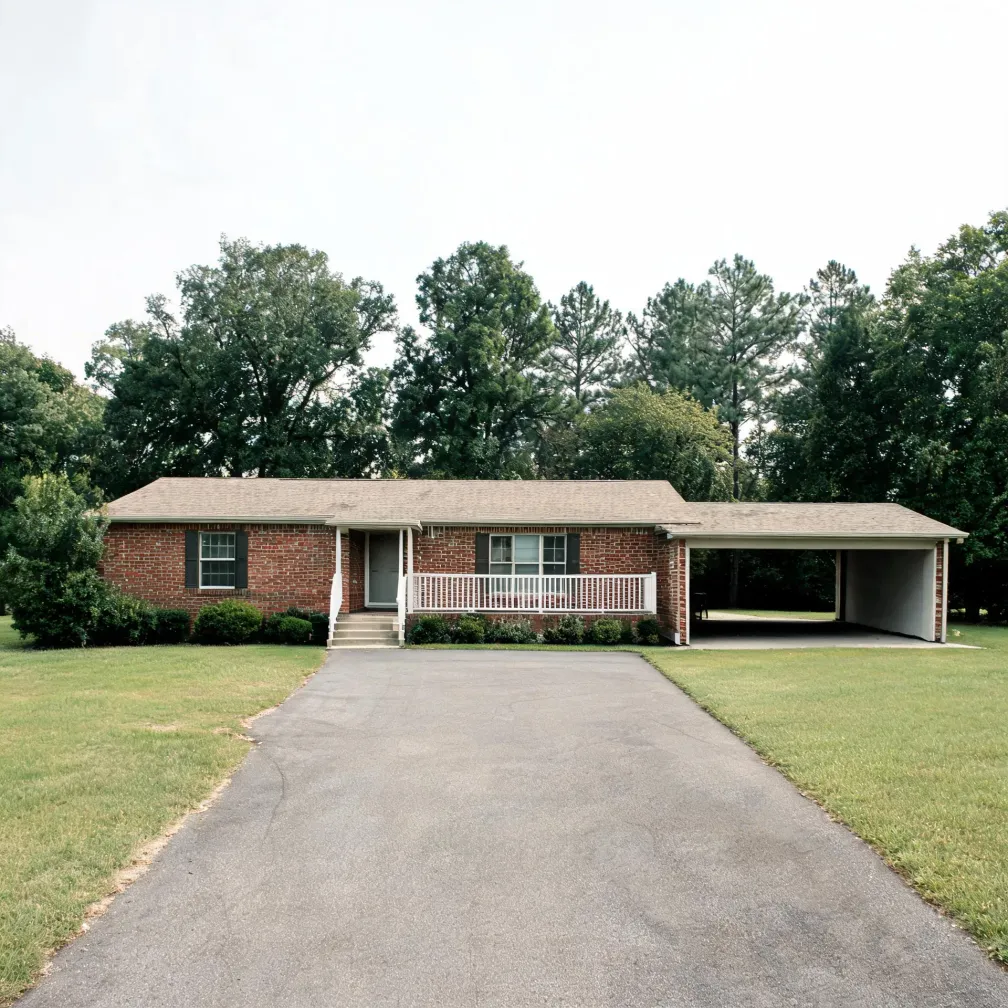
What North Carolina homes are up against.
NOAA National Centers for Environmental Information, Storm Events Database, bulk CSV export, events 2015-01-01 through 2024-12-31. · U.S. Census Bureau, 2020-2024 American Community Survey 5-Year Estimates

A contractor quoting a job has to work out what the equipment at that particular address will be running against, and a statewide total is not the number that answers it. 10,154 severe weather events were recorded in North Carolina between 2015 and 2024. That rate means equipment across the state is asked to hold capacity and recover on a regular basis, but the figure cannot tell you how hard any one unit has had to work. One address sits on ground that drains fast and shades early; another holds heat long after the air outside cools. A contractor reads the site to answer what the statewide record cannot.
A quote for a mini split install starts with what the contractor can verify, not what they can assume from the outside. Half the homes in North Carolina were built in 1991 or earlier (2020-2024 ACS 5-year). That spread means a contractor working a typical job in this state has real odds of finding a panel that was sized for a different load than what a modern system draws, or ductwork that was never designed to be bypassed. The electrical service gets checked before any equipment is specified.
Does your county put extra stress on HVAC equipment?
2015–2024 · Source: NOAA National Centers for Environmental Information, Storm Events Database.
A condenser sitting outside contends with whatever the sky delivers: driving rain, hail, ice accumulation, high winds, and stretches of heat that push a system to its limit for weeks at a time. Where a county ranks here reflects how often that kind of load shows up, and load shapes every decision about equipment capacity, placement, and protection. The contractor you are matched with works through those specifics before anything is sized or installed.
North Carolina HVAC Installation and Repair License Requirements
North Carolina sets its own rules for who can perform HVAC installation and repair work, and the provisions below are quoted from the state's own code rather than paraphrased.
North Carolina issues Class I heating licenses covering all systems in all structures, and Class II licenses covering heating systems in single-family detached residential dwellings.
A state license for this trade means the work on your home has to be done by someone the state has vetted and authorized, not just anyone who shows up with tools. That distinction matters when you are deciding who to let into your house. Every contractor this site routes a request to holds the license these provisions describe.
View the Source Provisions2 provisions
North Carolina issues Class I heating licenses covering all systems in all structures, and Class II licenses covering heating systems in single-family detached residential dwellings.
North Carolina requires a license before any person or firm may engage in, or offer to engage in, the business of heating contracting.